Are Your Awnings Growing Algae? The Truth About Awning Cleaning in Vancouver's Rain
Jimmy ;-)
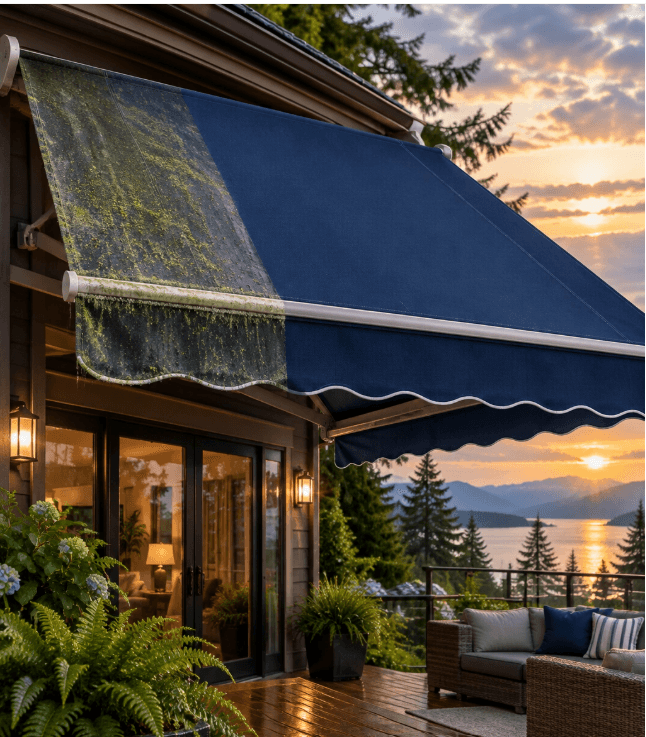
If your awning has started to look green, grey or streaky, you are not imagining it. Vancouver’s wet climate can be tough on exterior fabrics, vinyl, metal and glass awnings.
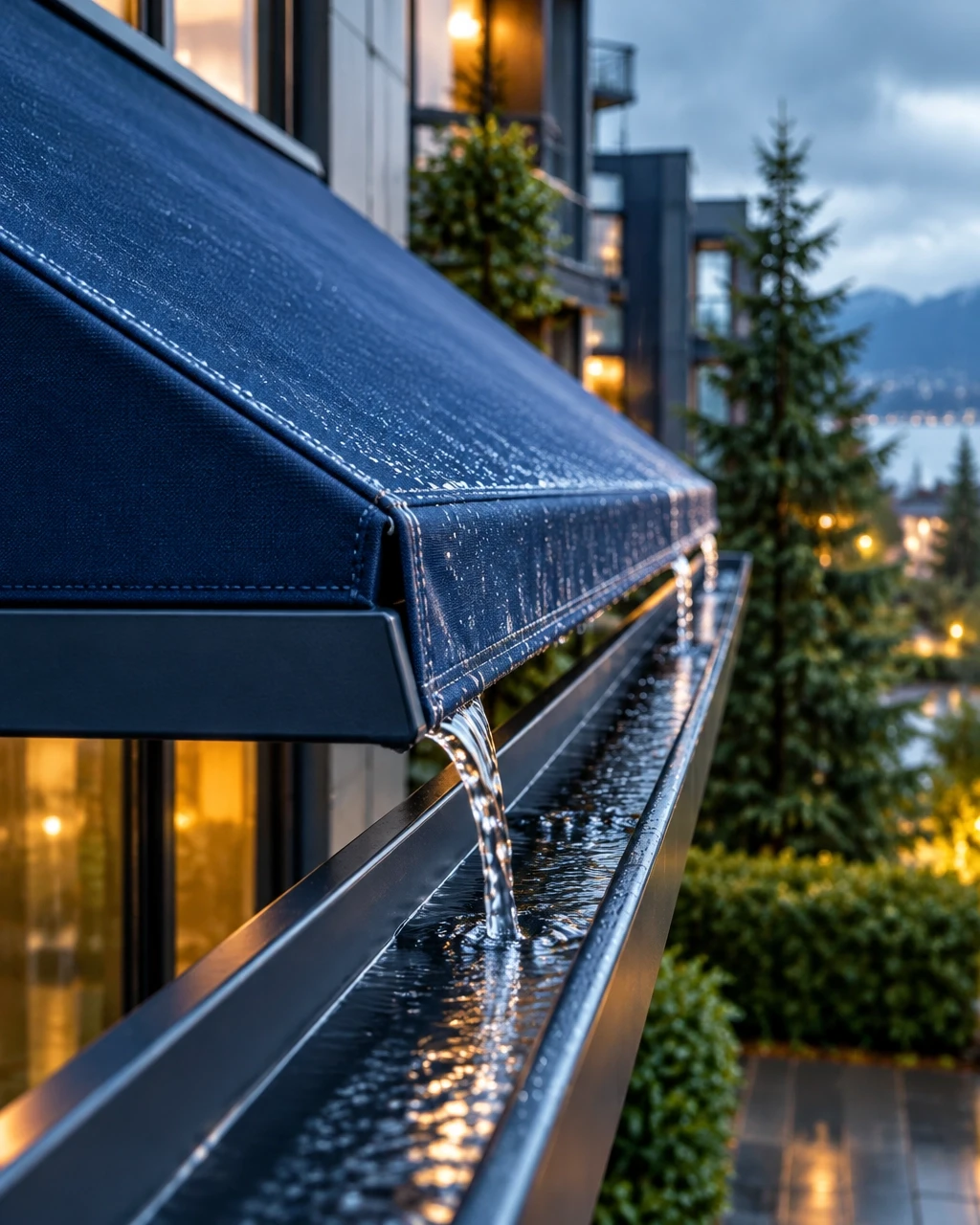
Rain, humidity, shade, pollen and falling leaves create the perfect recipe for dirt and algae buildup. Over time, that buildup can affect more than your property’s appearance. It can hold moisture against the surface, contribute to staining and shorten the usable life of the awning.
The good news? A professional deep clean can make a noticeable difference.
At IMAGINE Maintenance, we provide reliable awning cleaning services in Vancouver for homeowners, businesses, strata properties and property managers. Our goal is simple: restore the appearance of your awnings and help keep them in service for longer.
Why Vancouver’s rain is hard on awnings
Vancouver is known for beautiful greenery, mild temperatures and plenty of rain. Those same conditions can be challenging for exterior surfaces.
Awnings are especially vulnerable because they often:
Stay damp for long periods
Sit in shaded or north-facing areas
Collect pollen, dust, leaves and tree debris
Have seams, folds or textured surfaces that hold moisture
Receive splashback from sidewalks, driveways and busy streets
Drain slowly when debris blocks channels or edges
Algae and mildew need moisture and an organic food source. A thin layer of pollen, dirt or decomposing leaves can provide both. Once that film settles into an awning’s surface, green growth can develop surprisingly quickly.
As the Government of British Columbia explains, algae growth is encouraged by a combination of environmental conditions, including nutrients, moisture, light and stable conditions. A wet awning exposed to shade and organic debris has many of those conditions in one place.
Psssst… Vancouver’s rain is not really “washing” your awning clean. Often, it is simply adding more moisture to the dirt already there.
What does algae buildup look like?
Algae and organic buildup do not always appear as bright green patches. In many cases, the early signs are subtle:
A faint green tint across the fabric
Dark streaks near seams or the wall connection
Grey or brown areas that look permanently damp
Black specks or mildew-like spots
A dull, dingy finish instead of the original colour
Water that does not flow freely from the awning edge
A musty smell when the awning is extended
On glass or hard-surface awnings, buildup may look like a green film, brown leaf staining, mineral spots or a general haze. On fabric awnings, it may settle into the weave and become more difficult to remove with a basic rinse.
The earlier you deal with the problem, the easier it usually is to restore the surface.
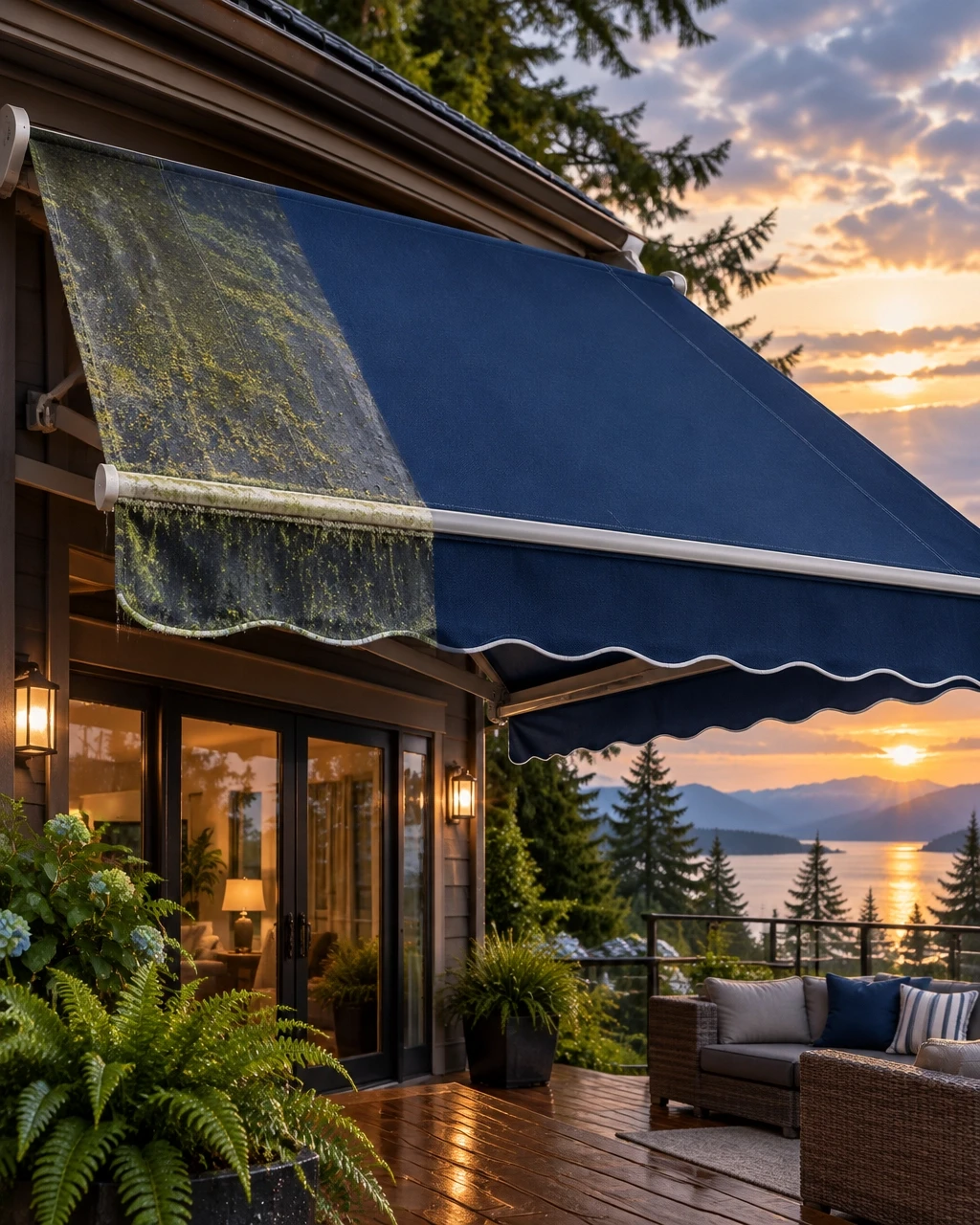
Why dirt and algae can shorten an awning’s usable life
An awning is designed to handle outdoor conditions, but it still needs reasonable care. Persistent dirt and algae can create several problems.
Moisture stays trapped
Organic growth holds moisture against fabric, vinyl and coated surfaces. This can prevent the awning from drying properly after rain and increase the chance of mildew, odours and staining.
Retractable awnings are particularly vulnerable if they are rolled up while damp. Moisture becomes trapped inside the folds, where it has limited airflow and little sunlight.
Protective finishes can wear down
Many awning materials rely on coatings or treatments that help resist water, staining and mildew. Dirt buildup can interfere with those protective features. Regular, gentle cleaning helps the surface perform as intended.
Stains become harder to remove
Fresh dirt and early algae are usually easier to clean than long-standing buildup. As organic matter sits on the surface, it can leave behind discolouration and stubborn marks.
On glass awnings, decomposing leaves and minerals from runoff can create brown streaks or hazy deposits. On fabric, repeated moisture and staining can affect the appearance even after the surface has been cleaned.
Small maintenance issues can be missed
A professional cleaning also gives you a chance to notice problems such as:
Loose or damaged seams
Blocked drainage points
Corrosion on metal components
Water pooling in one area
Deteriorated mounting points
Fabric that is no longer drying evenly
Cleaning does not replace repairs, but it can help you spot concerns before they become more expensive.
What a professional awning cleaning restores
A proper deep clean is more than spraying the surface with water.
At IMAGINE Maintenance, we assess the awning material and surrounding property before choosing an appropriate cleaning approach. Depending on the surface and condition, professional cleaning may help restore:
Appearance
Removing dirt, algae, mildew and surface buildup brings back cleaner colours and a more presentable finish. This matters at home, but it matters even more at a storefront, restaurant, office or strata entrance.
Surface cleanliness
A clean awning helps reduce the organic film that feeds future growth. It also removes dirt that can transfer onto walls, windows, doors and walkways.
Water flow
Where appropriate, cleaning around edges and drainage points helps water move away from the awning instead of sitting on the surface.
Usable life
Gentle, regular maintenance can help reduce the moisture and buildup that contribute to premature wear. It cannot make an old awning new again, but it can help you get more practical use from an awning that is still structurally sound.
Why high-pressure cleaning is not always the answer
It is tempting to reach for the strongest pressure washer available. For many awnings, that is not the safest choice.
Too much pressure can:
Damage fabric fibres
Lift coatings
Force water into seams
Spread dirt across the surface
Affect seals and connections
Push water into the building or wall assembly
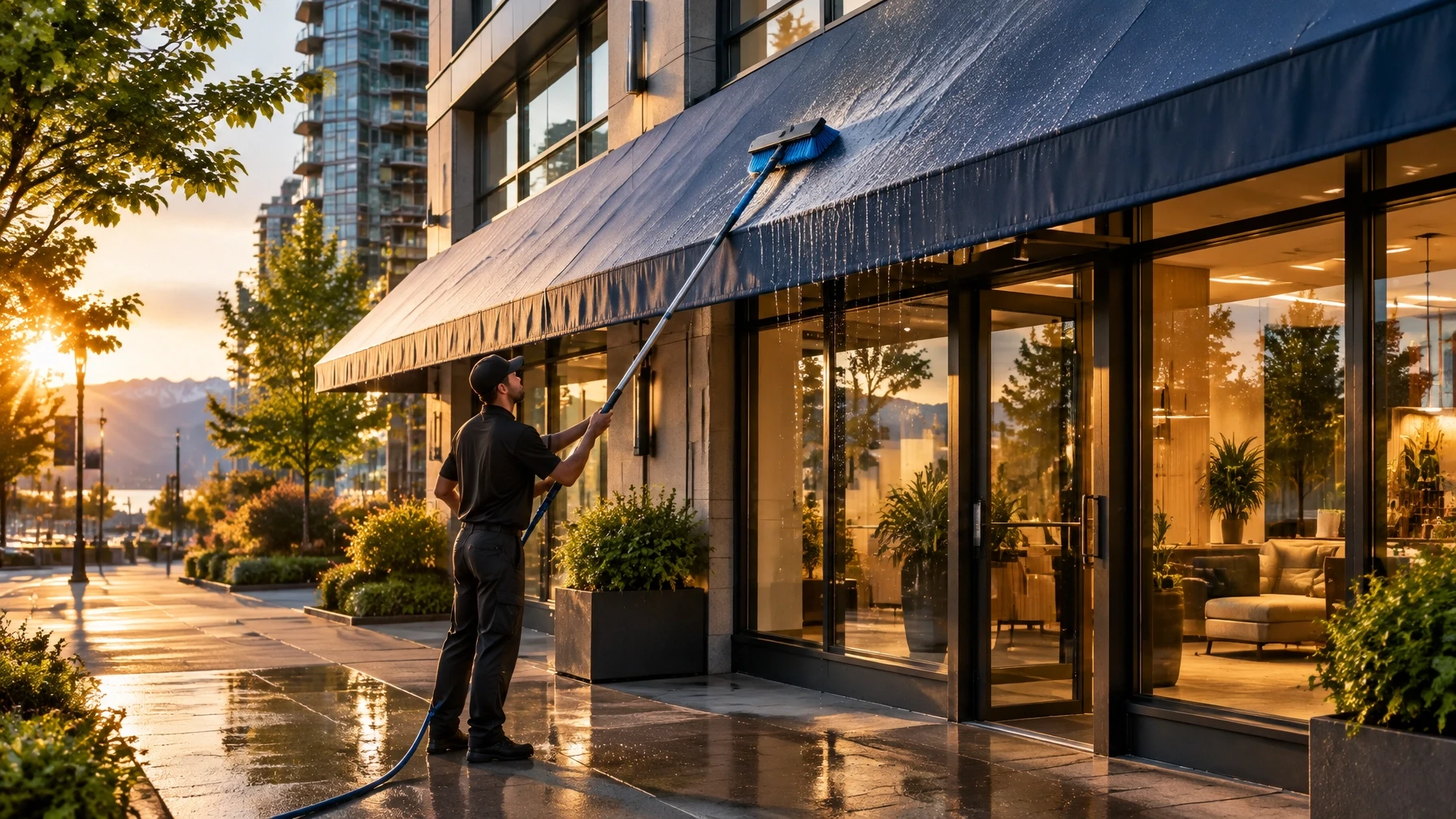
The right approach depends on the awning’s material, age, condition and location. A professional cleaner may use gentle brushing, suitable cleaning solutions, controlled rinsing and low-pressure methods rather than aggressive blasting.
This is especially important when working above entrances, patios, sidewalks, vehicles or valuable inventory. Safe work planning is part of responsible property care.
How often should awnings be cleaned in Vancouver?
There is no single schedule for every property. A small residential awning under a clear roof may need less attention than a restaurant awning beneath trees or a busy retail canopy.
As a general starting point:
Residential awnings: inspect and rinse regularly, with a deeper clean at least once a year
Shaded or tree-covered awnings: consider cleaning twice a year
Retail and commercial awnings: schedule cleaning based on foot traffic, exposure and presentation standards
Restaurant awnings: monitor for grease, smoke residue and frequent moisture
Strata and shared properties: include awnings in a broader seasonal maintenance plan
Many property owners find that spring is a good time to remove winter buildup. A late-summer or early-fall clean can also help address pollen, leaves and debris before the wettest part of the year.
The best schedule is the one that prevents heavy buildup rather than waiting until the awning looks neglected.
Simple ways to slow algae regrowth
Professional cleaning restores the surface, but a few simple habits can help keep it cleaner:
Remove leaves and branches before they collect.
Avoid rolling or folding a retractable awning while it is wet.
Check that water can drain away from the awning.
Trim branches that create constant shade and drop debris.
Keep sprinklers from spraying the awning.
Look for green tint or dark seams before growth becomes widespread.
Follow the manufacturer’s recommendations for your specific material.
If you manage a commercial or strata property, include awning inspections in your seasonal property care services plan. Coordinating awning cleaning with window cleaning, exterior maintenance and other seasonal work can make scheduling easier and help keep the whole property looking consistent.
A real customer result
A Vancouver homeowner shared this after IMAGINE cleaned a retractable deck awning:
> “They did a fantastic job – all of the dirt and algae is gone, and our awning looks virtually new even though it is actually 10 years old. We were delighted with the service that we received and highly recommend IMAGINE Maintenance.”
That is the result we aim for: a cleaner-looking property, a more usable outdoor space and one less maintenance concern on your list.
Restore your awning before the next wet season
Algae on an awning is common in Vancouver, but it does not have to become permanent. With the right cleaning method, regular care and a little attention to drainage and shade, you can protect the appearance and usable life of your awning.
IMAGINE Maintenance has more than 30 years of experience delivering dependable property care, cleaning and facilities solutions across Western Canada. We work carefully around homes, occupied properties, businesses, strata communities and valuable inventory.
Ready to see what professional cleaning can restore?
Request a free quote for awning cleaning, or contact our team to discuss the right approach for your property.
Frequently asked questions
Can you clean both retractable and fixed exterior awnings?
Yes. We clean a range of residential and commercial awning types, including retractable fabric awnings and fixed exterior awnings. The cleaning method is selected based on the material and condition.
Will awning cleaning remove all algae stains?
Cleaning can remove dirt, algae and organic buildup, but some long-standing stains may have affected the material permanently. We assess the condition before beginning and explain what results are realistic.
Can I pressure wash my awning myself?
High pressure can damage fabric, coatings, seams and seals. A gentler approach is usually safer. If you are unsure about the material or the right cleaning solution, professional advice can help prevent accidental damage.
Do you provide awning cleaning for commercial and strata properties?
Yes. IMAGINE supports homeowners, businesses, property managers and strata communities. Visit our commercial services page or strata services page to learn more.
Blogs & Insights